LINE Sticker Ranking Trends, October 2026: What Top Packs Share
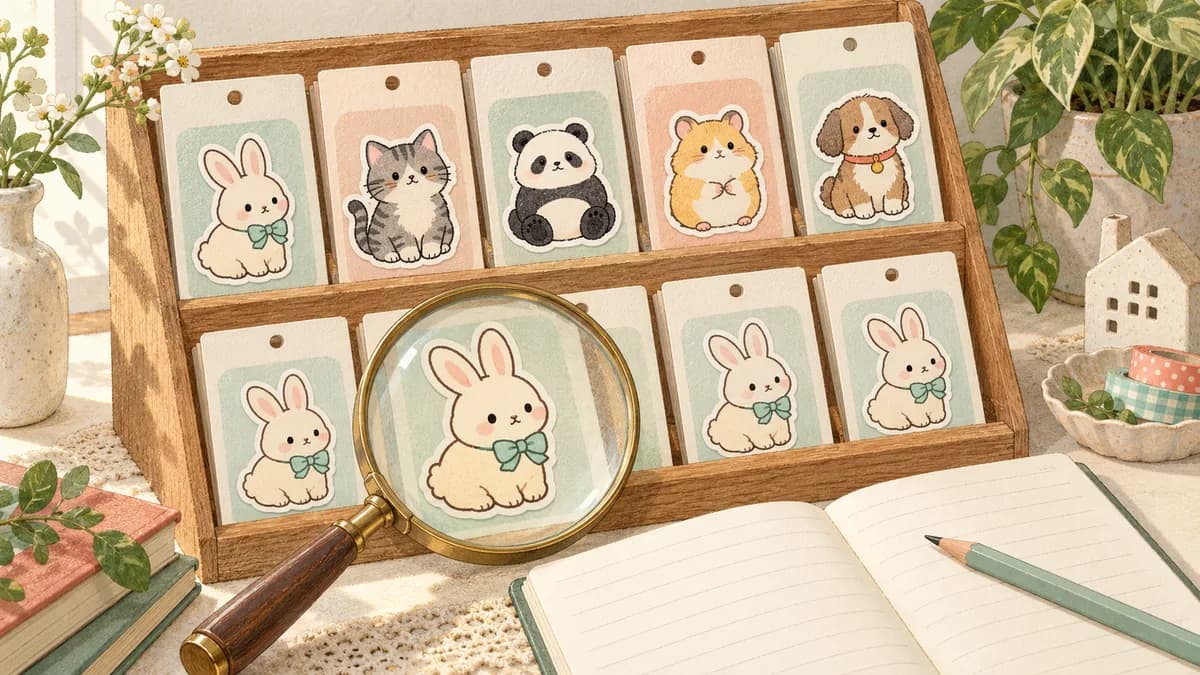
We opened the popular list expecting the top spots to be full of skilled artists with beautiful drawings. That was only half right. What stood out more than drawing skill was how often the same character appeared again and again. This article is an observation of the creator lists on the Japanese LINE STORE, and it pulls out only the patterns you can use when making your own stickers. It is a record of the shape of what sells, not a guide to copying any particular work.
How we looked
- Date: 14 October 2026, on the Japanese LINE STORE, without logging in.
- Scope: the top 30 popular and top 36 new creator stickers, the top 36 popular animated stickers, and the top 36 popular creator emoji.
- The lists show no rank numbers, so the order of the Popular tab is treated as the top.
- Categories are rough estimates based on titles. No work or character names are listed.
- Other regions' stores may look different. Treat these as patterns and check your own region's store too.
Pattern 1: The top is built on series
Of the top 30 popular stickers, a single series took 10 spots. Numbered sequels such as “-13”, “28”, and “3” filled out the list as well. In the top 36 popular animated stickers, several different packs of the same character appeared too.
A character people already like makes the next set easier to buy. It sounds obvious once you see it. LINE Creators Market's official tips on main images and titles also say that adding a series name or a volume number helps people find other sets in the same series. Even if your first set is not a big seller, every new set with the same character adds another way for people to discover it.
Pattern 2: Animals lead, and the mood is either laid-back cute or comedy
Animals were the most common motif. Among the top popular animated stickers, 15 could be identified as animals: cats 4, rabbits 3, pandas 2, dogs 2, and one each of others such as a shark, a pig, and a frog. In the top 36 popular emoji, rabbits and dogs appeared 4 times each.
The mood fell into two camps. One is soft and cute, leaning on hearts and fluffy words. The other aims for laughs, with titles promising wild energy, puns, or a sharp tongue. Plain, middle-of-the-road cuteness was surprisingly rare. The top works shared a fully committed personality that makes the person receiving the sticker think “that is so them” at a glance.
Pattern 3: New releases name their audience in the title
The new arrivals list had a different feel from the popular list. In its top 36 titles, words that narrow down who will use the stickers stood out. The examples below show the kinds of audiences named.
A set made for everyone tends to get buried in both search and lists. Forty stickers made for a tennis club group chat, on the other hand, feel personal to anyone in a tennis club. Once the audience is set, the lines write themselves: “Nice shot!” and “Everyone, gather up!” for a club, or “Noted, thanks” and “Let me check” for work.
- School clubs: table tennis club, tennis club
- Jobs: nutritionists, nursing work
- Family and region: grandparents who speak a local dialect
- Hobbies and pet owners: people who keep a specific kind of animal
- Purpose: “for everyday use”, “Got it!”
Pattern 4: Animated stickers spell out “animated” and “with or without text”
In the top 36 popular animated stickers, 7 titles included the Japanese word for “animated”, and 6 said “with text”. Some series even released a version with text and a version without text as separate packs of the same character.
The no-text version suits people who just want to send a reaction without choosing words. The text version suits people who want to say that exact line. Same artwork, different reason to buy. There were also 13 titles written only in English, so more overseas works made this list than the static popular list. Motion may simply travel across languages more easily than words.
Pattern 5: Most top emoji move, and their purpose is specific
Of the top 36 popular creator emoji, 20 were animated. Even more than with stickers, motion seems to be a reason people choose them.
The titles described their use in concrete terms: “add a feeling to the end of a sentence”, “for everyday use”, “polite language”, and “text tags for work chats”. About 5 also promised calm colors on a black base or a simple, grown-up look. Because emoji sit inside messages, words that help people picture which sentence they will go in, and where, seem to work well.
What was rare at the top
In the top 30 popular stickers, titles that put polite language, greetings, or the seasons up front were almost absent. Does that mean polite stickers do not sell? That would be a hasty conclusion. Polite-language works did appear in the top emoji, and new arrivals were starting to include Chinese zodiac motifs. Polite and seasonal sets may be the kind people find through search and features rather than at the very top of the popular list.
If you are planning for the year-end and New Year season, our separate guide in the related reading below covers it, along with the conditions for LINE's official winter feature.
How to use these patterns in your own set
Here is each pattern paired with a simple way to put it into practice.
- Series build up: Give your character a name from the first set and put it in the title. Make the second set with the same character and a new theme.
- Commit to laid-back cute or comedy: Sum up the personality in one word, such as easygoing, hyper, or sharp-tongued, and keep all 40 stickers in that personality.
- Narrow the audience: Pick the group that will use them, such as a club, a workplace, a family, or pet owners, and turn that group's catchphrases into the lines.
- Make with-text and no-text versions: Plan a no-text pack for reactions and a text pack for saying things in words as separate packages.
- Be specific with emoji: Write titles and descriptions that help people picture where they will use them, such as “at the end of a sentence” or “in work chats”.
Look at your own region's store as well
Everything above comes from the Japanese store on a single day, and we did not check other regions for this article. The patterns themselves, though, do not depend on the Japanese language: building a series, naming a clear audience, committing to a personality, and offering with-text and no-text versions. Open the popular and new lists in your own region and see which of them show up there.
Testing these patterns with Stampo
One advantage of making stickers with AI is that you can treat a trend as a hypothesis and test it again and again. In Stampo, you can tell the AI in the chat on the sticker creation page exactly who the set is for and what the personality is, for example “for a tennis club group chat, with a hyper personality”. There is also a mode that generates without lines, so you can start with a no-text version and add words in the editor.
Once your first set is finished, “Make a Volume 2 from a past set” on the creation page creates 40 new stickers with the same character and art style. Keeping the effort of a second volume small is one of the real strengths of AI. Animated stickers start from the animated sticker creation page, and animated emoji from the animated emoji creation page.
Browse the list, then decide your next set
What the top works shared was not drawing skill but a clear answer to “whose character, and what kind?” It can be your pet, your club teammates, or the catchphrases at your workplace. Make 40 stickers where you can picture the people using them, and if they catch on, follow up with a second volume of the same character. That steady stacking is exactly the shape we saw at the top of the list.
FAQ
Will my set sell if it looks like a top-ranking character?
We do not recommend imitating. A work that resembles an existing character may not pass review because of rights issues. Borrow only the way top sets are made, such as building a series or narrowing the audience, and create your character from your own photos and ideas.
Do these ranking trends change every month?
The order of the lists changes daily. This article is an observation as of 14 October 2026. Patterns such as building a series or narrowing the audience, however, are different in nature from short-lived trends and tend to last longer.
Can AI-made stickers reach the top?
As of October 2026, we have not found a rule that blocks sales simply because AI was used. If you declare AI use when you submit, a label saying so appears on the product page. How well a set sells depends on the work itself, and no method can promise a top ranking.
Sources
- LINE STORE (Japan): Creators' sticker list
- LINE STORE (Japan): Creators' emoji list
- LINE Creators Market official note: tips for main images and titles